
Recent News
The SBS News Center provides verified updates, research summaries, policy developments, and analysis on issues affecting families after a CSAM accusation or conviction. This page is the primary hub for all articles published by Support Beyond Stigma, ensuring search engines can index each news item and recognize this section as the authoritative source for ongoing updates.

Radical Acceptance - Coping When Life Falls Apart
Acknowledging that something has happened is not the same as saying it was okay, fair, or deserved. These are genuinely different things. A spouse's arrest is a fact whether or not you accept it. Your sister's conviction didn't become more real because you stopped fighting the news in your mind. Radical acceptance simply stops the mental energy spent arguing about what is already true.

The Emotional Phases of Betrayal in CSAM Cases — And How to Cope
CSAM cases create a level of legal complexity, public judgment, and moral shock that most people never imagine navigating. The emotional weight doesn’t fall on one person alone. It spreads through families, through silence, through the people who love someone the world won’t let them talk about openly. This article won’t offer a recovery timeline. It will give you an honest map of the terrain — the emotional phases of betrayal in CSAM cases, and how to cope when the ground keeps shifting.

Beyond Sex Registries: The Growing Web of Harmful Public Lists
Learn why the logic behind sex offender registries, a system already proven ineffective and harmful, has quietly expanded across the country to include a wide range of other convictions. Despite decades of research showing that public registries do not reduce crime [1], [2], [3] all 50 states and D.C., still maintain sex‑based registries, and at least 22 states and D.C. now operate additional registries for offenses such as violent crimes, drug‑related convictions, arson, domestic violence, animal abuse, child abuse, gang affiliation, and even white‑collar crimes. Some states have gone further, creating registries for people prohibited from owning firearms, individuals with multiple DWIs, and even “dangerous dogs.”

A Roadmap for Reform: Confronting the Unfair Practice of Registering Children and Young Adults as Sex Offenders
Across the United States, children are being subjected to one of the harshest penalties our legal system can impose: placement on a public sex offender registry.
If your loved one is a juvenile or young adult forced to register as a sex offender, this report may provide the evidence and context you need to engage your legislators and advocate for meaningful sex offender registry policy reform.

Stop Registering Kids and Young Adults: The Truth Lawmakers Must Confront
Across the country, youth and young adults are being swept into sex offender registries that were never designed for them, saddling adolescents with lifelong penalties for behaviors often rooted in immaturity rather than predation. Despite overwhelming research showing that young people rarely reoffend and respond exceptionally well to treatment, the majority of states in the US continue to impose registration requirements that block access to housing, education, employment, and community life. These laws disproportionately harm vulnerable groups — including Black, Brown, Indigenous, LGBTQ+ youth and those with disabilities. As public awareness grows, so does the recognition that these punitive policies are ineffective, unjust, and urgently in need of reform.

Facing Federal or State CSAM Charges? What to Know Before Hiring an Attorney
This article covers what to do in the first 24 hours, how to identify whether the case is federal, state, or both, why court-specific experience matters, how to find and vet qualified attorneys, what to ask in a consultation, which red flags to avoid, and what fees and timelines may look like. This is not legal advice. It is straight information from people who have worked these cases.

No License to Intimidate: How the Law Protects Registered Sex Offenders from Harassment
While sex offender registry entries are publicly accessible, people listed on them still have the same legal protection as anyone else against targeted harassment, vigilante acts, and violence. Using registry information to threaten, stalk, harass, or physically attack someone is unlawful under US federal and state law.

Rebuilding Family Life After a Loved One's CSAM Release
Release day is not a finish line. For the family members who have spent months or years holding everything together, the moment a loved one walks out of prison often feels less like relief and more like the start of something they have no map for. The legal system does not hand families a guide. The community does not offer a warm welcome. And the silence that has surrounded this experience for so long does not lift just because a sentence has been served.
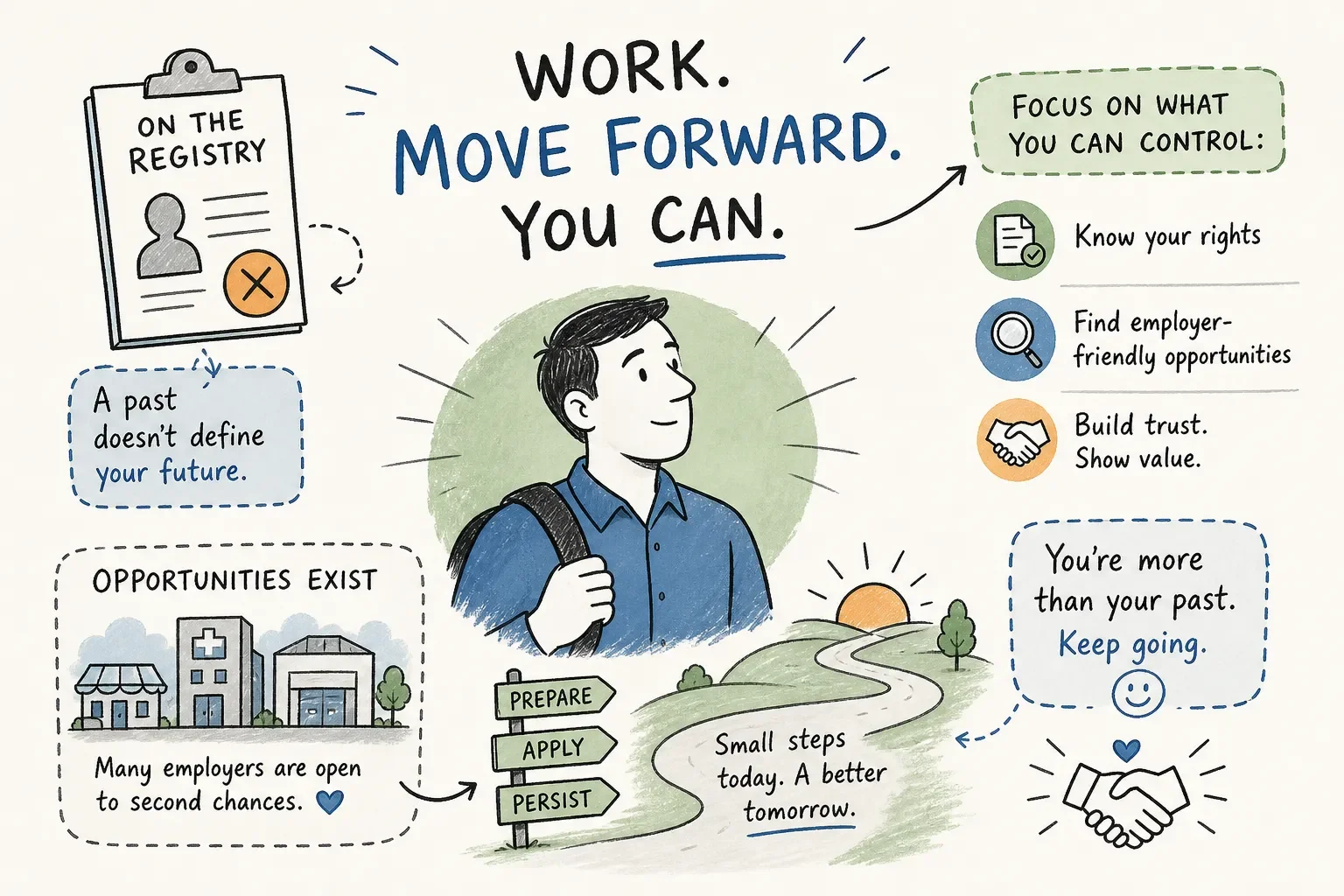
Employment and the Sex Offender Registry: What’s Allowed, What’s Restricted, and What’s Possible
Learn more about which industries have clear legal barriers, how background check vendors work, which roles have a realistic track record of hiring registrants, and how to handle the disclosure conversation without derailing an otherwise strong candidacy.

When a Loved One Faces a US Federal Child‑Pornography Investigation: What to Expect
This article walks through what happens during a federal child pornography (CSAM) investigation, from the first automated detection to the moment of arrest and formal charges. It also covers the constitutional rights that exist at every step, and the most urgent actions families should take. You don't have to navigate this alone, and resources like SBS (Support Beyond Stigma) exist to give loved ones honest, judgment-free information when nowhere else feels safe to look.
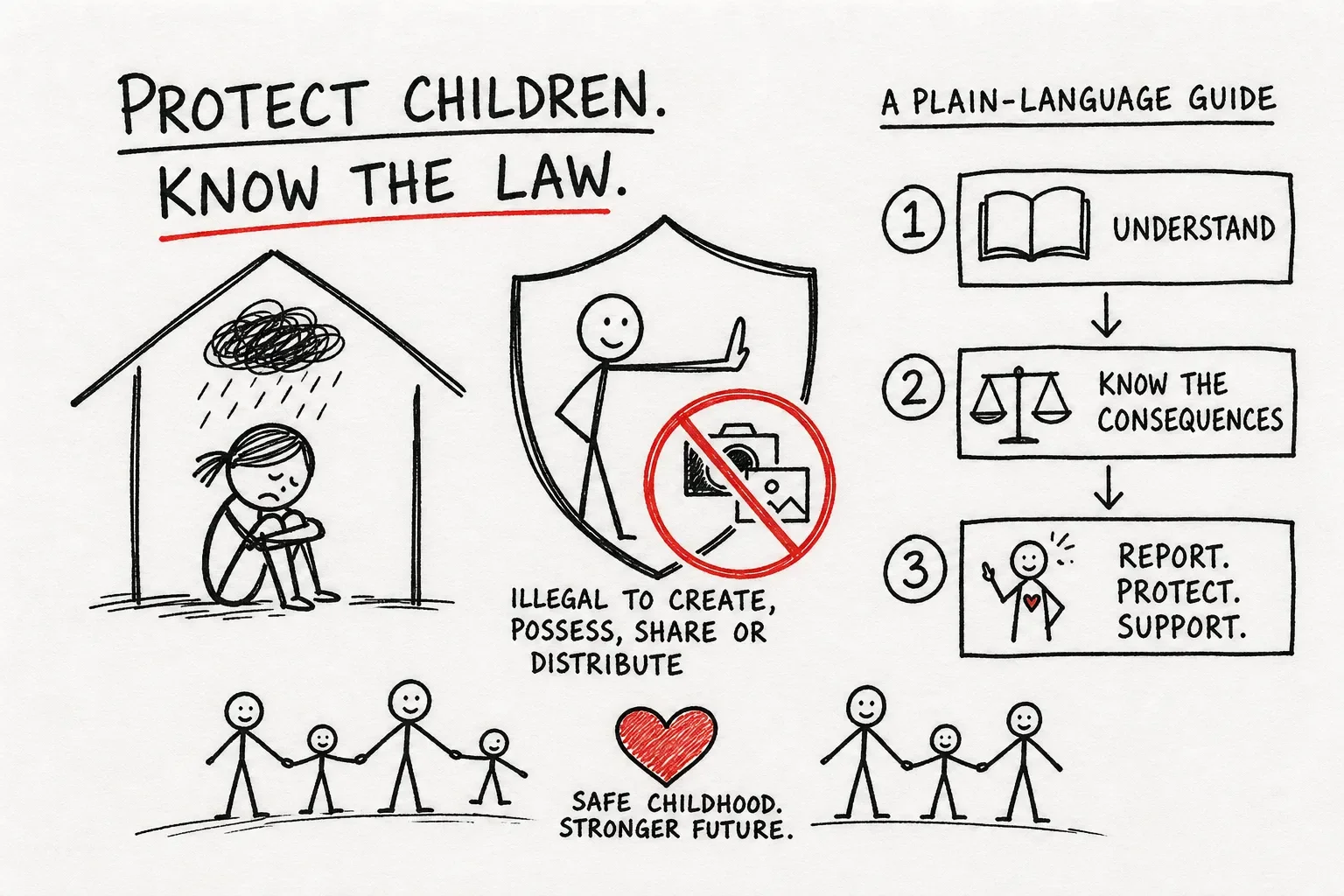
What is CSAM and Why Do We Still Have to Explain it in 2026
This article breaks down what “CSAM” actually means under federal and state law, how investigations typically begin, and why charges vary so widely. Families are often blindsided by complex terminology, sudden arrests, and rapidly evolving laws — including new statutes covering AI‑generated images. By explaining the legal framework in clear, accessible language, this guide helps loved ones replace confusion with understanding and begin navigating a system that was never designed for them.
Florida Action Committee Files Federal Lawsuit Challenging Florida’s Sex-Offender Registration Laws
The Florida Action Committee (FAC), a statewide nonprofit organization advocating for evidence-based criminal justice policies, recently filed a federal lawsuit challenging Florida’s sex offender registration and restriction scheme as unconstitutional.
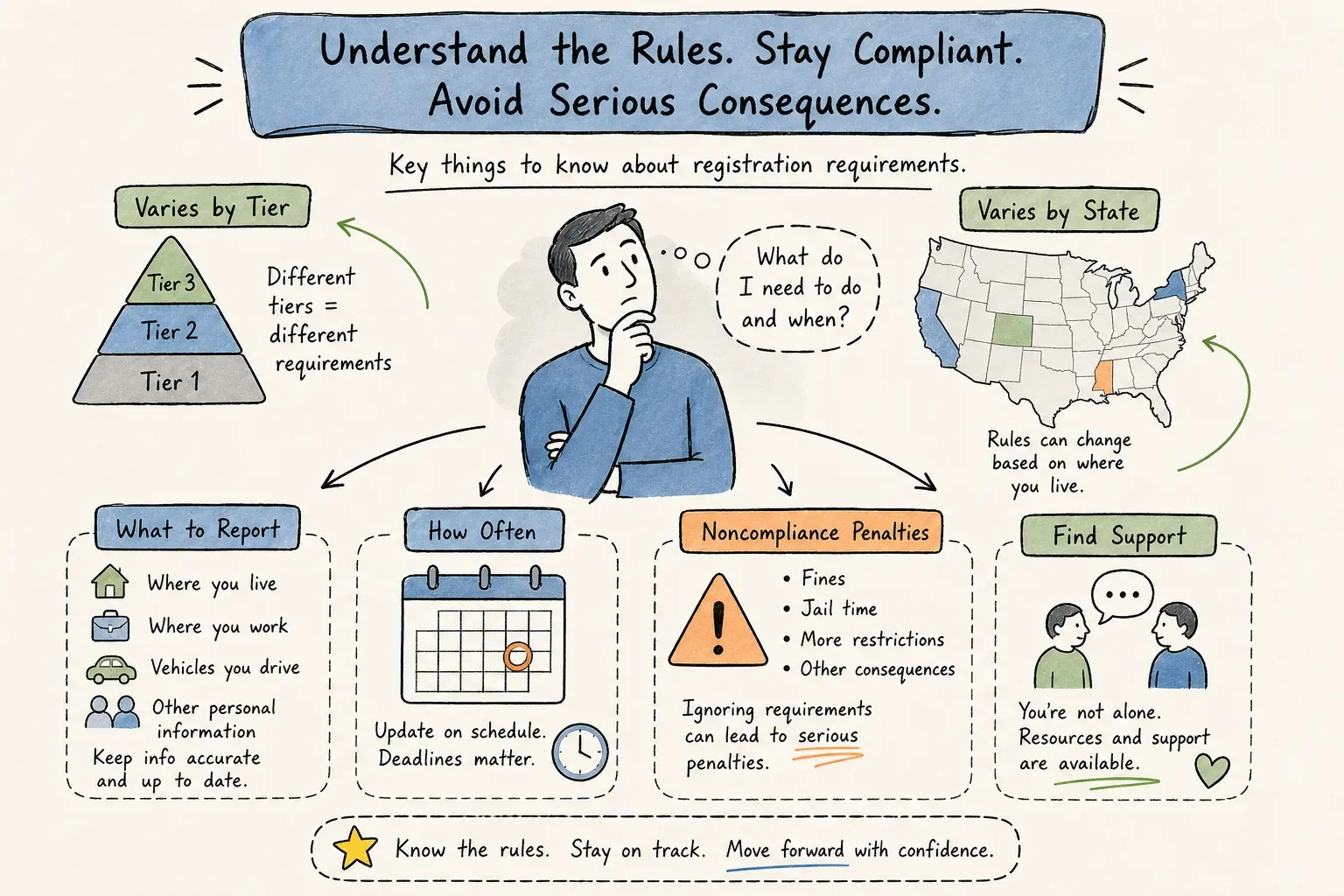
SORNA Isn’t the Whole Story: Why Federal vs. State Rules Leave Families Confused
Families face a maze of conflicting federal and state sex‑offender registration rules, and this article breaks down the core differences in clear, accessible language. It explains how SORNA’s federal tiers often fail to match state‑level requirements, why this mismatch creates confusion for loved ones, and what families must understand to navigate registration safely and confidently.

Selective Severity: Inequity and Disproportionate Punishment in Wisconsin
Wisconsin’s mandatory minimum sentencing laws, like those in many states, are rigid in situations that require individualized judgment. Judges are elected to weigh evidence, culpability, risk, rehabilitation, and mitigation, yet mandatory minimums often prevent sentences that reflect the specific facts of a case. That rigidity becomes more concerning when prosecutorial discretion is applied unevenly, as seen in Ozaukee County, Wisconsin under District Attorney Ben Lindsey, with young defendants receiving the harshest outcomes for non‑contact digital conduct while adult authority figures accused of hands‑on behavior receive more flexible charging decisions.

Coming Home After a CSAM Conviction: An Overview of Supervised Release
Supervised release in the federal system is similar in structure to probation, parole or extended supervision in state systems. Regardless of the label, all forms of supervision require individuals to follow specific conditions, meet regularly with a supervising officer, participate in treatment when ordered, and demonstrate stability as they rebuild their lives.

Swipe, See, Suffer — Snapchat’s Sexualized Snapshots
When police knocked with a search warrant about inappropriate material on Snapchat, their first question was who sent it—our son had no answer. That moment captures a widening emergency: Snapchat’s algorithmic feeds routinely surface sexualized and exploitative content beyond friend networks, exposing adolescents and emerging adults to grooming, trauma, and cascading legal and disciplinary fallout.

Why Private Browsing Matters for Families Seeking CSAM‑Related Support
For many families navigating a CSAM accusation, even searching for help can feel frightening. Loved ones often worry that looking up resources, legal information, or emotional support might be misinterpreted, logged, or traced. This fear is understandable — people in this situation are already under immense stress, often feeling scrutinized, isolated, and unsure where it’s safe to turn.
That’s exactly why learning a few simple privacy practices can make a meaningful difference.

The Power of Perseverance - Advocating for an Imprisoned Loved One
We wrote letters to legislators, to the head of the Department of Corrections, and to the Governor, raising concerns about what we believed were serious Eighth Amendment violations. Repeatedly, it felt as though nothing was changing. It felt as though hope was running out.
Then something shifted in me. I began to realize that the Department of Corrections was not simply a labyrinth of uncaring people, but an overburdened system filled with human beings trying to manage impossible pressures. If I wanted someone to truly hear us, I could not rely only on legal arguments, even valid ones. I needed to reach the compassion of another person. I needed to speak not only as someone making a case, but also as someone asking to be seen.

New Research Exposes How Offenders Search for and Share CSAM Online
To address a critical gap in understanding how active offenders search for and share CSAM, Ofcom partnered with Protect Children on an unprecedented anonymous survey of individuals who used the dark web to find this material. The findings offer rare insight into offender behavior and technology use — but they represent only one part of the problem.
This research does not capture the vast number of individuals who encounter or access CSAM on the open web through Google searches, mainstream social media platforms like Facebook, Instagram, X/Twitter, or through apps such as Snapchat. The scale of harm on the “surface web” remains significantly under‑measured.
In today’s digital environment, it is crucial not to jump to conclusions about the many young people being placed on sex‑offender registries for possession of CSAM. A significant portion may have been exposed to illegal material long before they understood what they were seeing, or before they had the developmental maturity to process it. Some may have encountered CSAM through algorithmic pathways, peer‑to‑peer sharing, or accidental exposure — not through deliberate predatory behavior.

The Butner Study: Flawed, Biased, and Unreliable - It Misleads Lawmakers
The Butner Study is widely viewed by experts in forensic psychology and criminology as an unreliable source of evidence and an inappropriate foundation for policymaking. Its central assertion was that most individuals convicted of online‑only offenses have secretly committed hands‑on abuse , which rested on a treatment‑program sample of incarcerated federal offenders that cannot be generalized to the broader population.