
Recent News
The SBS News Center provides verified updates, research summaries, policy developments, and analysis on issues affecting families after a CSAM accusation or conviction. This page is the primary hub for all articles published by Support Beyond Stigma, ensuring search engines can index each news item and recognize this section as the authoritative source for ongoing updates.
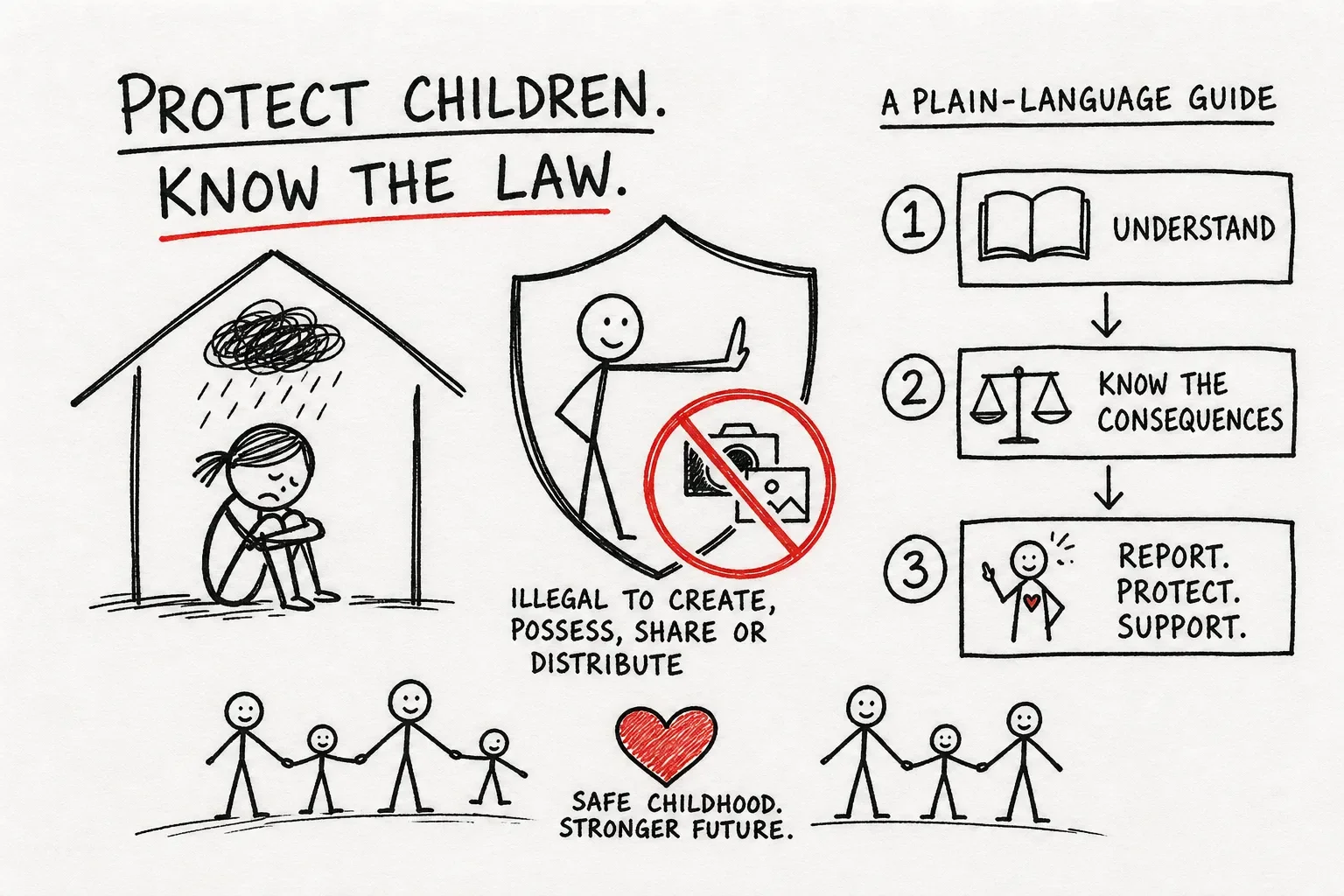
What is CSAM and Why Do We Still Have to Explain it in 2026
This article breaks down what “CSAM” actually means under federal and state law, how investigations typically begin, and why charges vary so widely. Families are often blindsided by complex terminology, sudden arrests, and rapidly evolving laws — including new statutes covering AI‑generated images. By explaining the legal framework in clear, accessible language, this guide helps loved ones replace confusion with understanding and begin navigating a system that was never designed for them.

Coming Home After a CSAM Conviction: An Overview of Supervised Release
Supervised release in the federal system is similar in structure to probation, parole or extended supervision in state systems. Regardless of the label, all forms of supervision require individuals to follow specific conditions, meet regularly with a supervising officer, participate in treatment when ordered, and demonstrate stability as they rebuild their lives.

Swipe, See, Suffer — Snapchat’s Sexualized Snapshots
When police knocked with a search warrant about inappropriate material on Snapchat, their first question was who sent it—our son had no answer. That moment captures a widening emergency: Snapchat’s algorithmic feeds routinely surface sexualized and exploitative content beyond friend networks, exposing adolescents and emerging adults to grooming, trauma, and cascading legal and disciplinary fallout.

The Butner Study: Flawed, Biased, and Unreliable - It Misleads Lawmakers
The Butner Study is widely viewed by experts in forensic psychology and criminology as an unreliable source of evidence and an inappropriate foundation for policymaking. Its central assertion was that most individuals convicted of online‑only offenses have secretly committed hands‑on abuse , which rested on a treatment‑program sample of incarcerated federal offenders that cannot be generalized to the broader population.
Reconsidering Mandatory Minimums for Young Adults in CSAM Cases - A Policy Argument for Restoring Judicial Discretion
Across the country, policymakers are grappling with the challenge of applying laws written decades ago to a digital world that has transformed far faster than the legal system. Nowhere is this tension more visible than in the prosecution of child sexual abuse material offenses involving young adults.

Cached, Convicted, Condemned: Why Sex Offender Registries and Mandatory Minimums Fail Youth
The doorbell rang before dawn on August 16, 2022. It sounded like a newborn’s cry, sharp and impossible to ignore. I checked my phone: 6:00 a.m., the sky was still dark. When I looked out our windows, officers stood at the front door in vests and fully armed. A Department of Justice forensic truck sat in our driveway; at least five squad cars surrounded our house like an impending storm.
That morning everything changed.

Social Media Finally Held Accountable for Misleading Practices
Recent legal outcomes penalizing social media companies for misleading practices are taking hold. How long will it be until they are held accountable for allowing CSAM to be uploaded to their sites, and only reporting the harm afterwards? The recent decision against Meta may be a clue.

Spain Orders Criminal Investigation Into X, Meta, and TikTok Over Alleged AI-Generated Child Sexual Abuse Material
"The Council of Ministers will invoke Article 8 of the Organic Statute of the Public Prosecution Service to request that it investigate the crimes that X, Meta and TikTok may be committing through the creation and dissemination of child pornography by means of their AI," Spanish Prime Minister Pedro Sánchez wrote on X on Tuesday.

The Families of People Who Commit Sex Crimes Need Care and Support
In a 2023 article authored by by Azadeh Nematy, a clinical psychologist and research assistant in the Department of Psychiatry at Trinity College Dublin, there is a focus on the impacts on family members of those accused or convicted of a sexual offense.

Dangerous Shifts in the Rapidly Evolving World of Online Child Sexual Abuse
As new threats continue to emerge, the rapidly evolving world of online child sexual abuse materials demands more urgent and global action is needed.

Online Social Media, Child Sexual Abuse Material Spreads Faster than it Can Be Taken Down
Child sexual abuse material runs rampant on the internet thanks to popular social media platforms like Facebook, even despite attempts to crack down on its spread. We need scalable technology to address it.
BY Glen Pounder and Rasty Turek