
Recent News

When a Loved One Faces a US Federal Child‑Pornography Investigation: What to Expect
This article walks through what happens during a federal child pornography (CSAM) investigation, from the first automated detection to the moment of arrest and formal charges. It also covers the constitutional rights that exist at every step, and the most urgent actions families should take. You don't have to navigate this alone, and resources like SBS (Support Beyond Stigma) exist to give loved ones honest, judgment-free information when nowhere else feels safe to look.
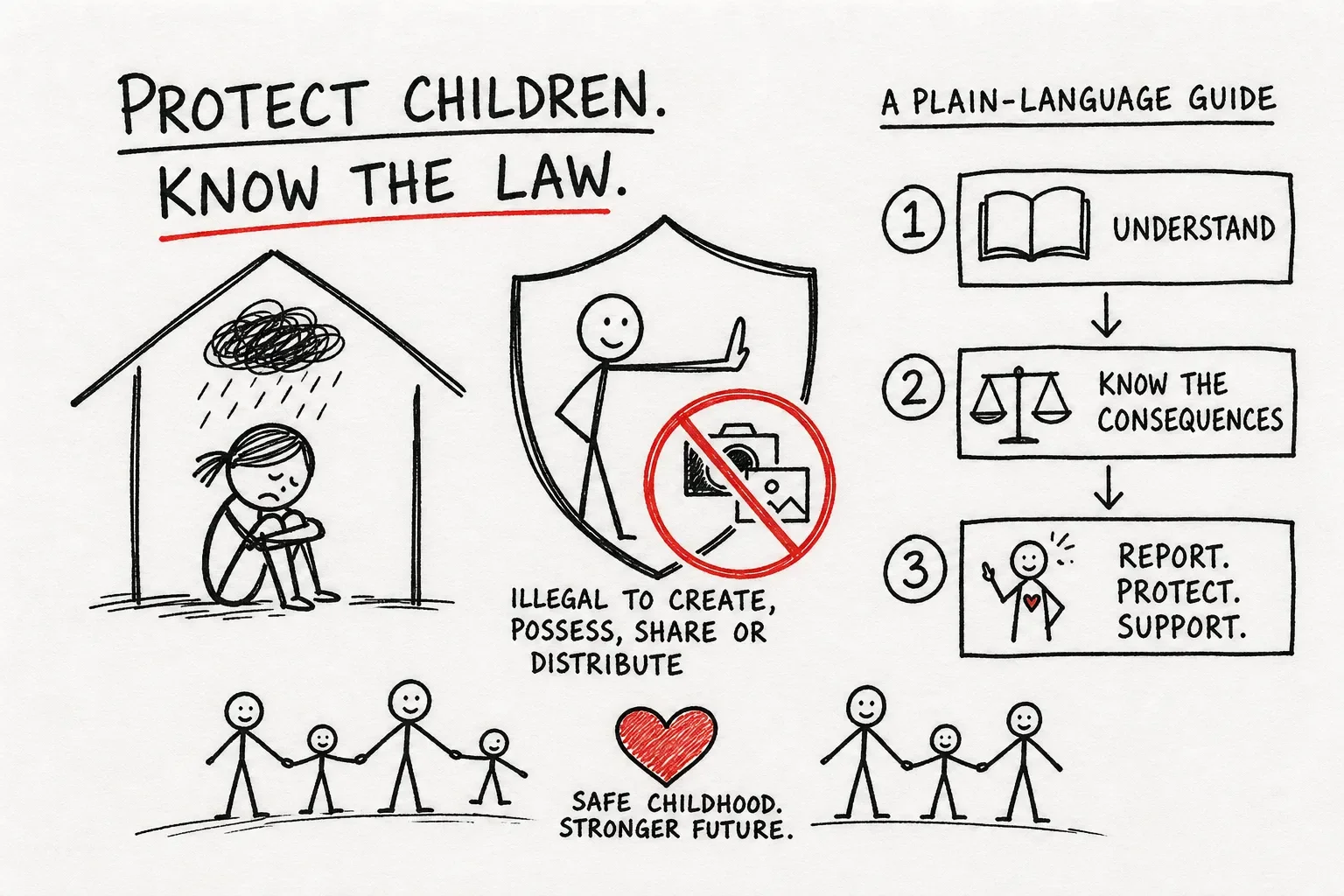
What is CSAM and Why Do We Still Have to Explain it in 2026
This article breaks down what “CSAM” actually means under federal and state law, how investigations typically begin, and why charges vary so widely. Families are often blindsided by complex terminology, sudden arrests, and rapidly evolving laws — including new statutes covering AI‑generated images. By explaining the legal framework in clear, accessible language, this guide helps loved ones replace confusion with understanding and begin navigating a system that was never designed for them.

Selective Severity: Inequity and Disproportionate Punishment in Wisconsin
Wisconsin’s mandatory minimum sentencing laws, like those in many states, are rigid in situations that require individualized judgment. Judges are elected to weigh evidence, culpability, risk, rehabilitation, and mitigation, yet mandatory minimums often prevent sentences that reflect the specific facts of a case. That rigidity becomes more concerning when prosecutorial discretion is applied unevenly, as seen in Ozaukee County, Wisconsin under District Attorney Ben Lindsey, with young defendants receiving the harshest outcomes for non‑contact digital conduct while adult authority figures accused of hands‑on behavior receive more flexible charging decisions.

Coming Home After a CSAM Conviction: An Overview of Supervised Release
Supervised release in the federal system is similar in structure to probation, parole or extended supervision in state systems. Regardless of the label, all forms of supervision require individuals to follow specific conditions, meet regularly with a supervising officer, participate in treatment when ordered, and demonstrate stability as they rebuild their lives.

Swipe, See, Suffer — Snapchat’s Sexualized Snapshots
When police knocked with a search warrant about inappropriate material on Snapchat, their first question was who sent it—our son had no answer. That moment captures a widening emergency: Snapchat’s algorithmic feeds routinely surface sexualized and exploitative content beyond friend networks, exposing adolescents and emerging adults to grooming, trauma, and cascading legal and disciplinary fallout.

Not a Dark‑Web Issue: CSAM Thrives on Social Media, and Prevention Is Urgent
Support Beyond Stigma continues to ask a fundamental question: why isn’t the Senate demanding that these companies implement filters to prevent illegal images from being uploaded in the first place? Why focus on reporting after the harm is done rather than on prevention?

Social Media Finally Held Accountable for Misleading Practices
Recent legal outcomes penalizing social media companies for misleading practices are taking hold. How long will it be until they are held accountable for allowing CSAM to be uploaded to their sites, and only reporting the harm afterwards? The recent decision against Meta may be a clue.
Dangerous Shifts in the Rapidly Evolving World of Online Child Sexual Abuse
As new threats continue to emerge, the rapidly evolving world of online child sexual abuse materials demands more urgent and global action is needed.

An Investigation into Self-Generated Child Sexual Abuse Material Networks on Social Media
Stanford’s Evelyn Douek and Alex Stamos are joined by Stanford Internet Observatory (SIO) Research Manager Renée DiResta and Chief Technologist David Thiel to discuss a 2023 report on a months-long investigation into the distribution of illicit sexual content by minors online. The SIO research team identified a large network of accounts claiming to be minors, likely teenagers, who are producing, marketing and selling their own explicit content on social media.

Experiences of Non-offending Family Members
Learn more by reviewing Elaine Kavanagh’s thesis, “An Investigation of the Lived Experiences of Non-offending Family Members of Men Who Download Child Sexual Abuse Material (CSAM).”